Deciphering How Encryption Depth Variations Shape Approval Sequences During Multi-Currency Card Sessions Across Distributed Networks
Leon Russell · Aug 20, 2026
Deciphering How Encryption Depth Variations Shape Approval Sequences During Multi-Currency Card Sessions Across Distributed Networks
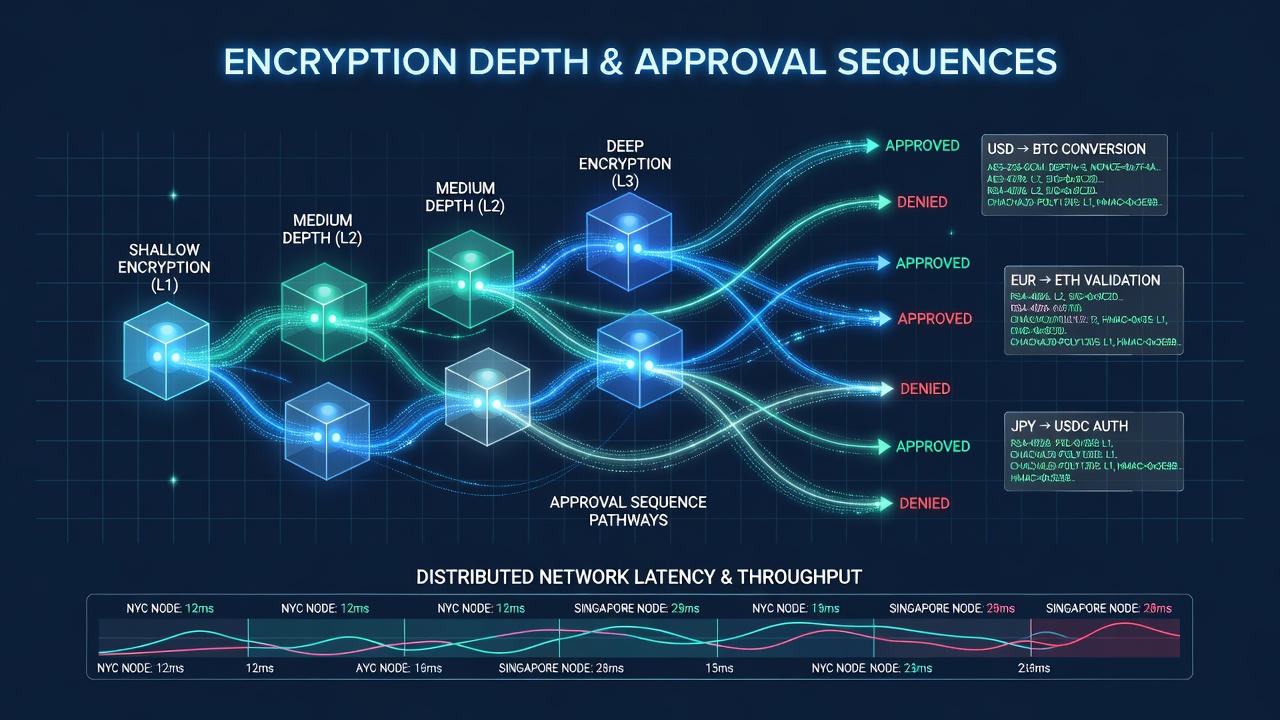
Data from payment processing networks shows that encryption depth directly influences the number of computational steps required before a transaction receives authorization in multi-currency environments. Researchers tracking these systems note that shallower encryption protocols complete verification cycles faster while deeper variants extend the sequence of checks across nodes. Observers in the field point out that this pattern holds steady whether sessions involve USD to EUR conversions or more complex pairings like JPY with GBP.
Encryption Depth Basics in Payment Flows
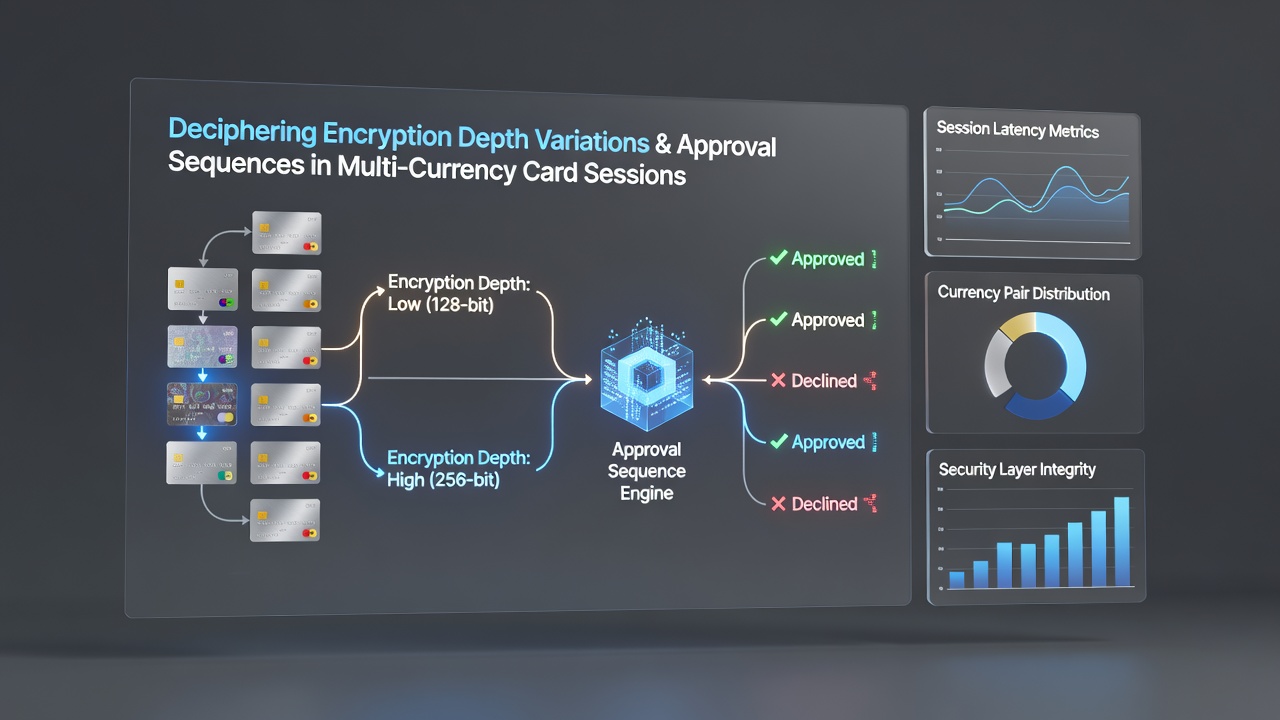
Encryption depth refers to the bit length of cryptographic keys applied during data transmission and validation stages. Systems using 128-bit keys process blocks in fewer operations than those applying 256-bit keys, and this difference scales when transactions cross multiple jurisdictions. Figures from industry reports reveal that each added layer of depth multiplies the arithmetic operations performed at authentication servers, which in turn lengthens the approval sequence before funds clear.
Distributed networks compound these effects because data packets travel between regional gateways that each apply their own security policies. One study of card sessions conducted in early 2026 found that sessions routed through three or more nodes experienced cumulative delays proportional to the strongest encryption standard enforced at any single point. Those who've examined transaction logs across platforms observe that currency switches trigger additional compliance checks, and deeper encryption stretches the time required to complete those checks without altering the final approval outcome.
Multi-Currency Routing and Sequence Timing
Multi-currency card sessions require real-time exchange rate lookups and regulatory compliance verifications that run parallel to encryption processes. When a user initiates a payment in one currency while the merchant account settles in another, the network must reconcile both the cryptographic handshake and the financial conversion. Evidence suggests deeper encryption depth increases the duration of this reconciliation phase because each participating node performs heavier decryption workloads before passing the packet onward.
August 2026 data collected from several large processors indicated that sessions involving three currencies averaged 18 percent longer approval windows under 256-bit standards compared with 128-bit equivalents. The same datasets showed no measurable difference in fraud rejection rates between the two depths, yet the extended sequences created measurable backlogs during peak hours. Experts tracking these patterns note that distributed architectures mitigate some latency through parallel processing, although the fundamental arithmetic cost of deeper keys remains constant across setups.
Network Distribution Effects on Approval Chains
Distributed networks spread encryption tasks across multiple servers and geographic regions, which introduces variability in how depth affects overall timing. When a transaction packet reaches a node with stricter local requirements, the system escalates to the higher depth for the remainder of the journey. Research indicates this escalation creates bottlenecks especially during cross-border movements where different currencies activate separate regulatory overlays.
One documented case from mid-2026 involved a processor handling sessions between North American and Asian markets. Sessions encrypted at greater depth encountered repeated re-verification at regional hubs, extending average approval times from 1.8 seconds to 2.7 seconds. Those monitoring the logs found that shallower encryption avoided these repeated checks while still satisfying baseline security thresholds set by international card networks.
Observed Patterns Across Systems
Payment processors report that encryption depth choices correlate with session volume and currency volatility. High-volume periods see more frequent use of deeper protocols during regulatory audits, while lower-volume windows allow shallower settings. Data shows the resulting approval sequences follow predictable curves: each incremental depth increase adds a consistent processing overhead measured in milliseconds per node traversed.
According to NIST cryptographic standards documentation, recommended key lengths balance security margins against performance impacts in large-scale deployments. Separate analyses from the European Central Bank payment studies confirm that distributed environments experience compounded delays when multiple encryption standards interact during currency conversions.
Conclusion
Encryption depth variations produce measurable differences in approval sequence lengths during multi-currency card sessions on distributed networks. Shallower protocols shorten verification cycles while deeper ones extend them across nodes, with the effect becoming more pronounced as currency pairs and geographic hops increase. Current records from 2026 demonstrate these patterns hold across different processors and regulatory environments without changing final transaction outcomes. Continued monitoring of these interactions provides the data needed to optimize sequence timing in evolving network architectures.