How Regulatory Shifts in Payment Gateways Alter Jackpot Claim Patterns Among Cross-Platform Live Game Users
Drew Roth · Jul 2, 2026
How Regulatory Shifts in Payment Gateways Alter Jackpot Claim Patterns Among Cross-Platform Live Game Users
Regulatory adjustments to payment gateway operations have begun reshaping how cross-platform live game users approach jackpot claims, with noticeable shifts in timing, platform selection, and verification sequences emerging since early 2026. New compliance layers around transaction monitoring and cross-border fund movement have forced operators to adapt their payout pipelines, which in turn influences when and where players initiate claims after hitting progressive or fixed jackpots in live dealer environments.
Payment Gateway Compliance Updates Across Jurisdictions
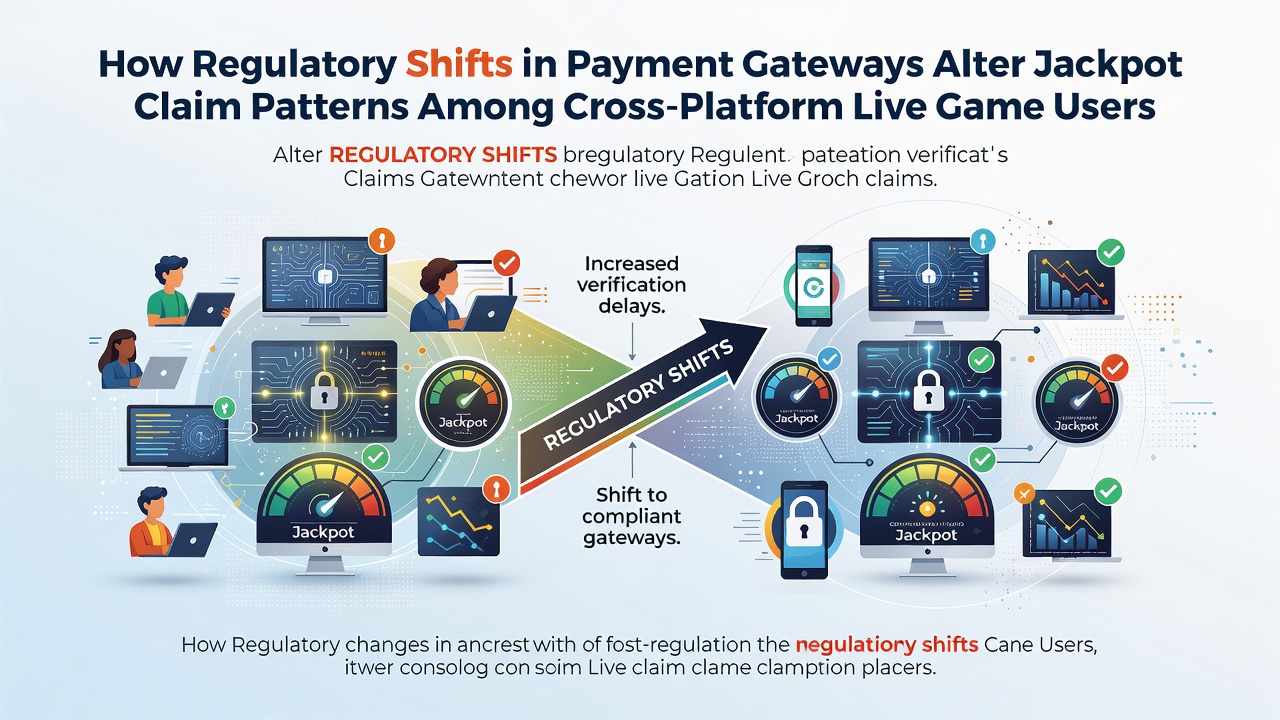
Authorities in multiple regions implemented tighter controls on digital payment processors handling gaming transactions during the first half of 2026, with several measures taking effect around July of that year. These rules require gateways to perform enhanced due diligence on high-value transfers, including real-time identity cross-checks and source-of-funds verification before releasing jackpot proceeds. Observers note that such requirements extend processing windows for claims initiated through mobile applications compared to desktop sessions, prompting users to switch devices mid-claim to meet the new thresholds more efficiently.
Data compiled by the Nevada Gaming Control Board shows an uptick in multi-device claim sequences among live game participants following these updates, particularly when gateways route funds through international corridors. Users accessing games on both smartphone and tablet platforms now coordinate their sessions to align verification steps with the least restrictive gateway settings available at that moment.
Observed Changes in Claim Timing and Platform Preferences
Cross-platform live game environments expose users to varying gateway options depending on the device and operating system in use, which regulatory shifts have amplified. Research from industry tracking firms indicates that jackpot claims submitted within the first ten minutes after a win have declined in jurisdictions with strict gateway authentication mandates, while claims filed after thirty minutes have risen as players complete additional compliance steps. Those who've studied transaction logs across providers report that users increasingly favor desktop interfaces for initial claim registration because certain gateways apply lighter scrutiny to browser-based sessions than to app-based ones.

Live dealer games running simultaneously on multiple platforms create additional variables, since regulatory guidance in places such as iGaming Ontario emphasizes consistent application of payment rules regardless of access method. This consistency pushes users toward hybrid claim strategies where they start the process on one device and finish verification on another to bypass temporary holds that single-platform attempts trigger more frequently.
Impact on Repetition Patterns and User Behavior Cycles
Analyses of settlement data reveal that regulatory tightening around gateways correlates with altered repetition rates in jackpot claims across live game networks. Players who previously claimed smaller wins immediately now consolidate multiple wins before initiating a single larger transfer, reducing the number of gateway interactions subject to enhanced checks. Figures released by the Australian Communications and Media Authority highlight similar consolidation trends among international participants using cross-platform setups, where currency conversion rules intersect with payment processor requirements to extend overall claim cycles.
Those monitoring live game ecosystems have documented how these patterns feed back into session lengths, with users extending play after a jackpot to align the eventual claim with gateway windows that have lower friction under the updated rules. Providers have responded by embedding gateway status indicators directly into game interfaces, allowing participants to preview likely processing paths before committing to a claim action.
Future Adjustments and Industry Responses
Operators continue refining gateway integrations as additional regulatory phases roll out through late 2026, focusing on API-level accommodations that streamline verification across mobile and desktop environments. Academic reviews from institutions such as the University of Nevada, Las Vegas track these adaptations and note measurable compression in claim abandonment rates once users master the revised sequences. Cross-platform compatibility remains a focal point because live games depend on uninterrupted connectivity, and any gateway friction introduced by regulation directly affects the speed at which winnings reach player accounts.
Conclusion
Regulatory evolution in payment gateways continues to drive measurable adjustments in how cross-platform live game users structure their jackpot claims, with timing, device choice, and consolidation behaviors reflecting compliance demands that took hold around mid-2026. Ongoing monitoring by regulatory bodies and research entities will determine whether these patterns stabilize or shift further as gateways implement additional technical solutions.