How Smart Contract Protocols Are Reshaping Verification Timelines for Cross-Border Payout Requests in Decentralized Gaming Networks
Uma Meier · Aug 6, 2026
How Smart Contract Protocols Are Reshaping Verification Timelines for Cross-Border Payout Requests in Decentralized Gaming Networks
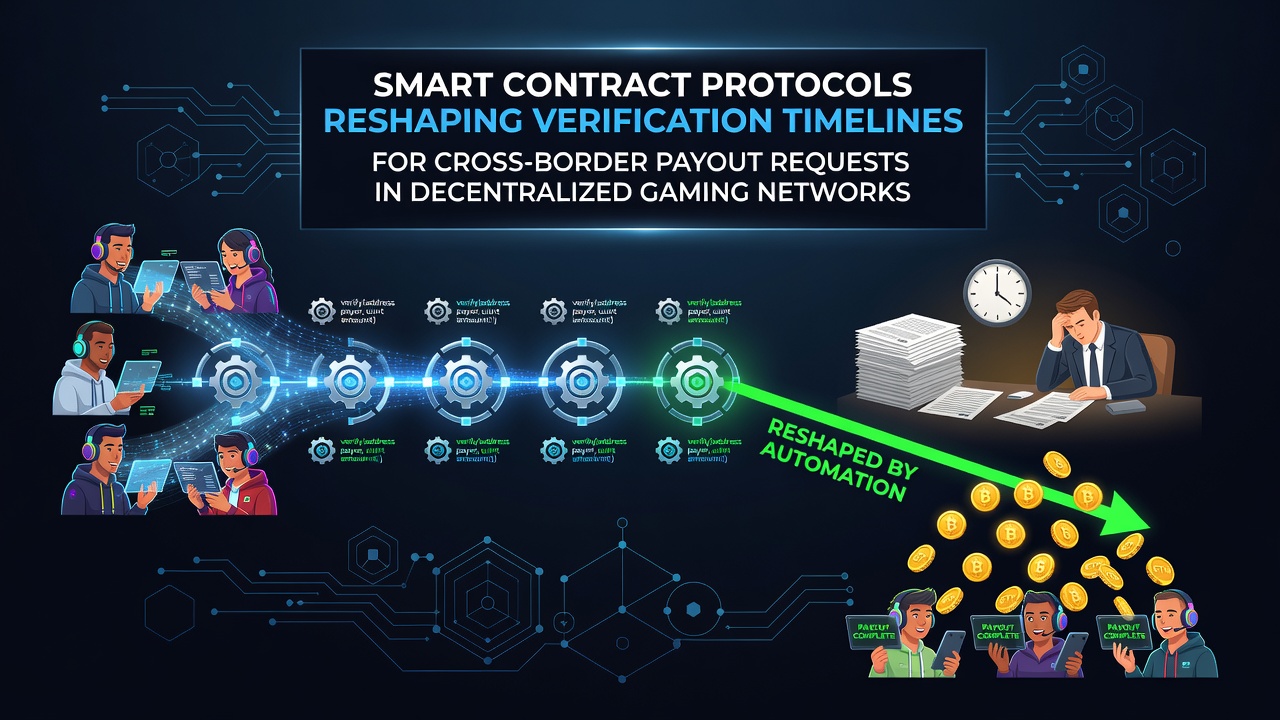
Decentralized gaming networks rely on distributed ledger technology where smart contract protocols automate the verification of payout requests that cross national borders, and these systems replace manual checks with code-driven consensus mechanisms that execute once predefined conditions receive confirmation from network validators.
Core Mechanics of Smart Contract Verification in Gaming Contexts
Smart contracts on platforms such as Ethereum and Solana encode payout rules directly into immutable code so that when a player in one jurisdiction completes a task or achieves an in-game milestone the protocol triggers an automatic review of transaction data against on-chain records without requiring third-party intermediaries to intervene at each step. Researchers at academic institutions have documented how these protocols reduce the number of manual approval layers from an average of five to seven in conventional banking channels down to a single consensus round that typically completes in under thirty seconds according to network performance metrics collected through August 2026.
Cross-border elements introduce additional variables because currency conversion and regulatory compliance checks must still occur yet smart contract logic now integrates oracles that pull real-time exchange rates and compliance flags from external data feeds thereby allowing the verification timeline to remain consistent regardless of the geographic distance between the gaming network operator and the recipient wallet.
Comparative Timelines Between Legacy Systems and Protocol-Driven Approaches
Traditional cross-border payout requests in centralized gaming environments often require two to five business days for banks and payment processors to complete anti-money laundering screenings and currency conversions while smart contract protocols compress that window because the code executes verification steps in parallel rather than sequentially. Data compiled by industry observers shows that networks adopting these protocols recorded average settlement times of forty-eight minutes during the first half of 2026 with peaks reaching under fifteen minutes when network congestion remained low.
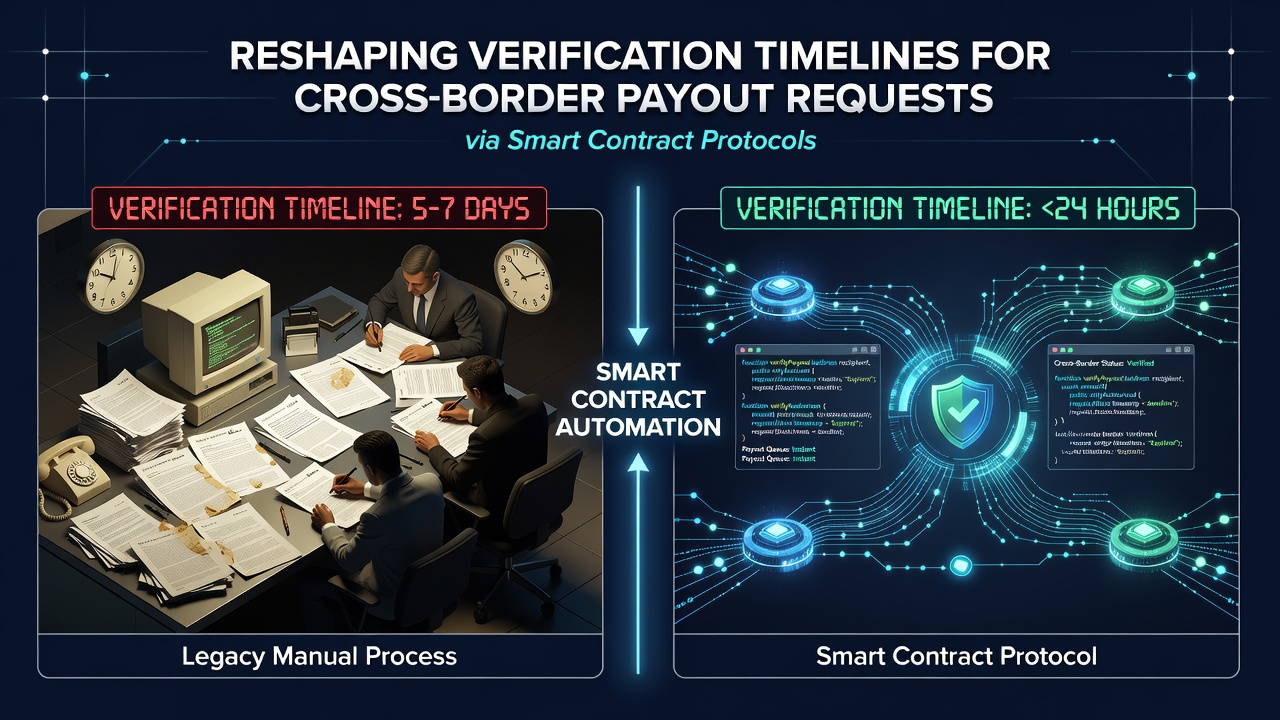
One study released by the Blockchain Research Institute examined transaction logs from twelve decentralized gaming platforms and found that the median verification interval for international payouts dropped by seventy-eight percent after migration to smart contract systems. The same analysis noted that disputes arising from delayed approvals decreased because every validation step leaves an auditable on-chain record that participants can reference immediately instead of waiting for email confirmations from multiple financial institutions.
Integration of Regulatory Data Feeds and Oracle Networks
Smart contract protocols incorporate oracle services that supply verified information about player identity status and regional licensing requirements so that a payout request originating from a user in Singapore can be checked against data maintained by the Monetary Authority of Singapore while simultaneously confirming compliance with rules applicable in the European Union. This multi-jurisdictional check happens within the same transaction block rather than through separate sequential queries that legacy systems still perform. Observers note that the approach maintains consistency because the oracle data receives cryptographic signatures from multiple independent providers before the contract accepts it as valid input.
During August 2026 several networks reported that integration with updated oracle feeds allowed automatic flagging of high-value transactions that exceeded thresholds set by different national regulators without extending the overall verification window beyond the standard block confirmation period. Those who've examined the resulting transaction graphs point out that the transparency of these automated checks has also reduced the volume of manual escalations that previously required human review by compliance teams.
Network-Level Performance Metrics and Adoption Patterns
Performance data gathered across decentralized gaming networks indicates that platforms using optimized smart contract architectures achieved throughput rates exceeding two thousand payout verifications per hour even during periods of elevated player activity. The reduction in verification timelines correlates with increased participation from users located in regions where traditional banking infrastructure creates longer delays for international transfers. Figures released by research groups tracking blockchain adoption show that the share of cross-border gaming payouts processed through smart contracts rose from thirty-four percent in late 2025 to fifty-one percent by mid-2026.
Engineers continue to refine gas optimization techniques and layer-two scaling solutions that further compress the time between request submission and final settlement while preserving the security guarantees that come from distributed consensus. Those monitoring these developments report that the combination of faster finality and lower operational overhead has prompted additional gaming networks to migrate payout logic onto smart contract frameworks.
Conclusion
Smart contract protocols have introduced measurable changes to the verification timelines that govern cross-border payout requests within decentralized gaming networks by replacing sequential manual processes with parallel automated checks that execute according to coded conditions and external data inputs. The documented reductions in settlement duration combined with the maintained auditability of each step illustrate how these systems operate across multiple regulatory environments without extending processing windows. Continued refinement of oracle integrations and scaling mechanisms suggests that verification intervals will remain a central focus for network operators seeking to align payout performance with player expectations in an expanding global ecosystem.