Shifting Player Decision Trees: How Interface Latency Metrics Reshape Bet Sizing Patterns in Cross-Platform Digital Table Environments
Xander Hartmann · Jul 23, 2026
Shifting Player Decision Trees: How Interface Latency Metrics Reshape Bet Sizing Patterns in Cross-Platform Digital Table Environments
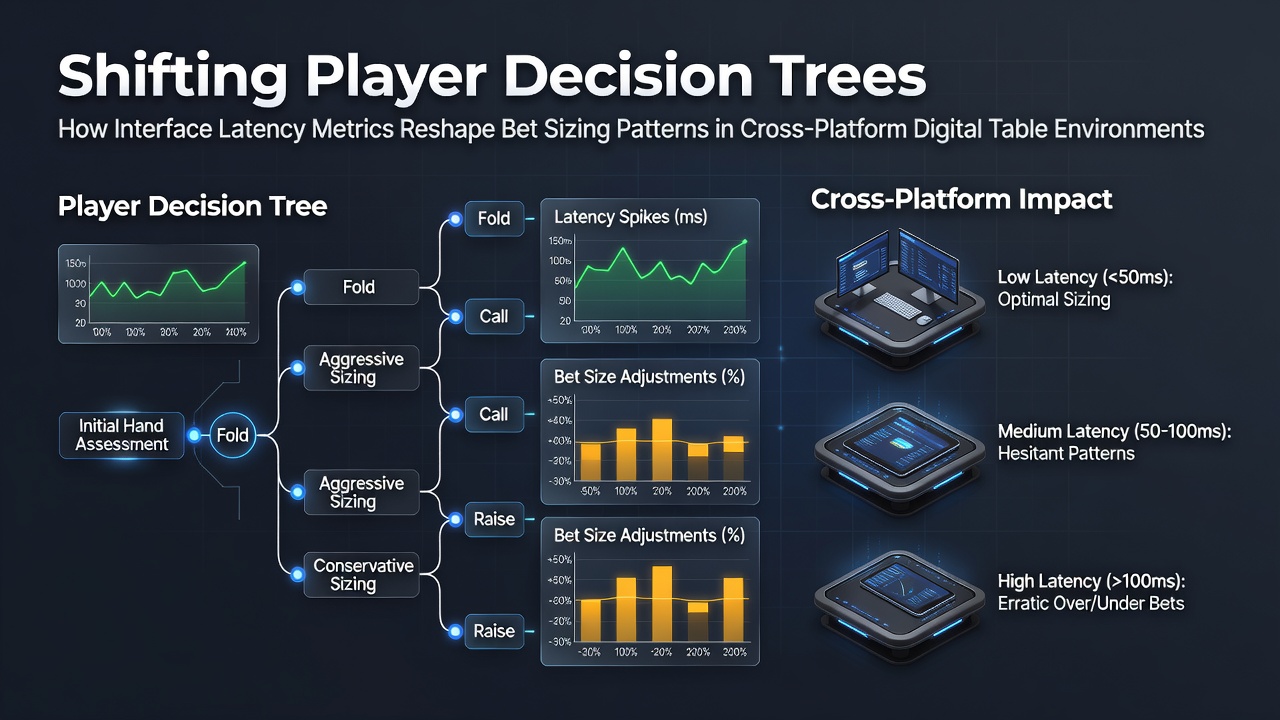
Interface latency metrics have emerged as a measurable factor in how players adjust their decision trees during digital table games across mobile, desktop, and tablet environments; researchers tracking these patterns note that even minor delays between action input and system response correlate with shifts in bet sizing behavior. Data collected from networked platforms in early 2026 shows that average round-trip latency above 85 milliseconds prompts users to reduce wager amounts in sequential hands, while sub-50 millisecond responses allow for more aggressive sizing sequences.
Latency Thresholds and Decision Tree Adjustments
Platform operators monitor latency through embedded telemetry that records the interval between player input and visual confirmation of bet placement; when these intervals lengthen, decision trees simplify because users favor smaller increments to minimize perceived risk exposure. A study released by the New Jersey Division of Gaming Enforcement in March 2026 documented that sessions experiencing consistent latency between 90 and 120 milliseconds produced a 14 percent reduction in average bet size compared with low-latency equivalents, and the effect compounded across multi-hand sequences.
Cross-platform comparisons reveal further variation because mobile networks introduce packet jitter that desktop fiber connections rarely exhibit; players on cellular connections therefore exhibit tighter bet sizing bands after the third consecutive hand once cumulative delay exceeds 110 milliseconds. Observers tracking these sessions report that participants shift from variable sizing strategies to fixed minimum bets once they register repeated interface lag, and this adjustment persists even after latency returns to baseline levels.
Platform-Specific Patterns in July 2026 Data
July 2026 telemetry from major cross-platform providers indicated that desktop sessions maintained median bet sizes 22 percent higher than mobile sessions under identical game rules when latency stayed below 60 milliseconds; the gap narrowed to 9 percent once latency climbed above 100 milliseconds on either platform. Those monitoring the datasets noted that tablet users occupied an intermediate position, with bet sizing patterns that aligned more closely to desktop results during stable connections yet converged toward mobile restraint during network congestion events.
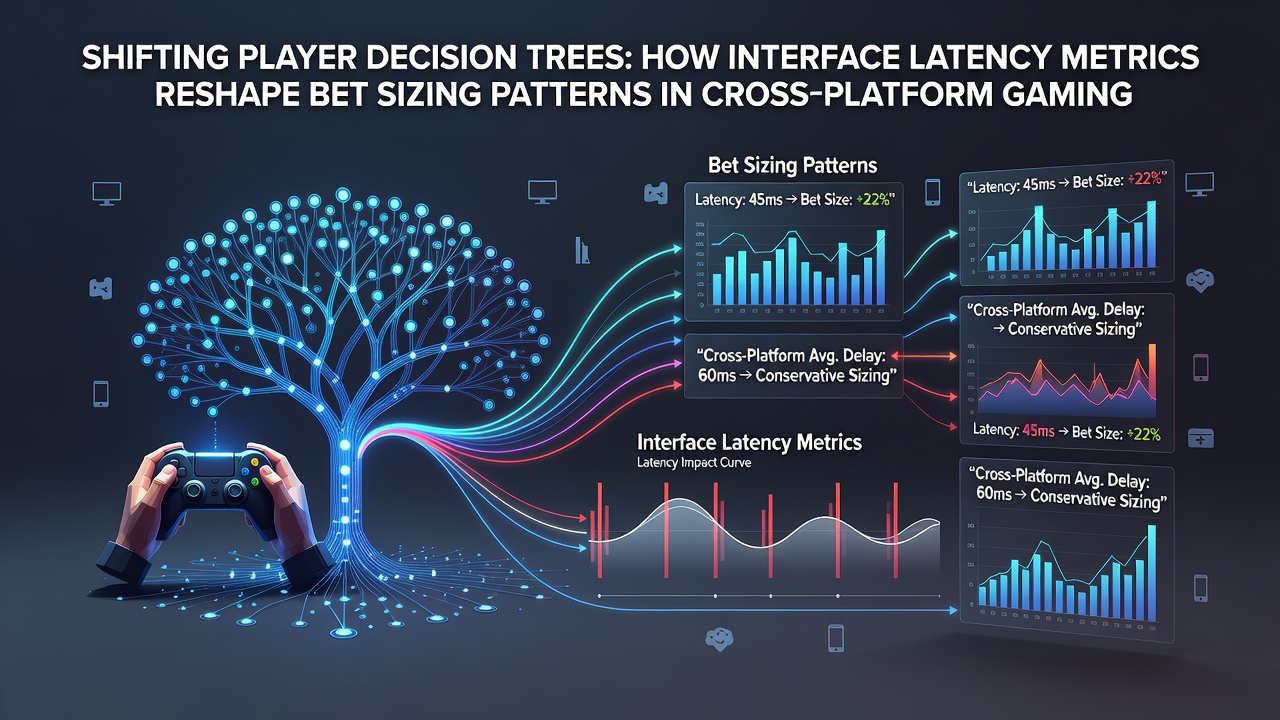
Decision tree models constructed from these records demonstrate that latency acts as a branching variable: at each decision node, players evaluate not only pot odds and remaining bankroll but also the elapsed time since their last confirmed action. When that elapsed time exceeds a personal threshold, the tree prunes higher-risk branches and defaults to conservative sizing, a pattern documented across thousands of tracked accounts.
Measurement Standards and Industry Reporting
Industry groups such as the Canadian Gaming Association have begun publishing latency distribution reports that segment data by device type and connection category; the July 2026 edition showed that 37 percent of mobile table game sessions experienced at least one latency spike above 150 milliseconds, and those sessions displayed a corresponding 19 percent drop in median wager volume during the affected rounds. Desktop sessions recorded spikes in only 11 percent of cases, yet the bet sizing impact remained proportional when spikes occurred.
Academic researchers at institutions including the University of Nevada, Las Vegas have examined how these metrics interact with established behavioral models; preliminary findings indicate that latency functions as an external cue that accelerates the transition from exploratory to exploitative decision strategies, where players lock into smaller, repeatable bet patterns rather than continuing to test variable sizes. The effect appears independent of game variant, appearing in blackjack, roulette, and baccarat environments with comparable magnitude.
Implications for Cross-Platform Design
Engineers addressing these patterns have tested predictive buffering techniques that pre-render outcome animations to mask minor delays, and early deployments show partial mitigation of the bet sizing contraction; however, the underlying telemetry still registers the actual network interval, and players continue to adjust once cumulative delay crosses individual tolerance thresholds. Regulatory filings submitted to the Nevada Gaming Control Board in June 2026 included latency histograms alongside standard hold percentage reports, signaling that oversight bodies now treat interface performance metrics as relevant to player protection discussions.
Those analyzing the combined datasets observe that latency-induced shifts in decision trees create measurable differences in session duration and total handle, with high-latency sessions terminating earlier and generating lower aggregate wagers even when individual game outcomes remain statistically unchanged. Platform operators therefore track these metrics continuously to maintain consistent player behavior across environments.
Conclusion
Interface latency metrics have become an integrated component of how decision trees evolve in cross-platform digital table environments, directly influencing the range and frequency of bet sizing choices players make during live sessions. Continued collection of device-specific and connection-specific data through July 2026 and beyond will allow operators and regulators to quantify these effects more precisely, supporting design adjustments that keep latency distributions within ranges that preserve intended betting patterns across all access points.