Unpacking the Effects of Cross-Border Data Regulations on Real-Time Payout Processing in Global Gaming Networks
Jordan Frank · Aug 11, 2026
Unpacking the Effects of Cross-Border Data Regulations on Real-Time Payout Processing in Global Gaming Networks
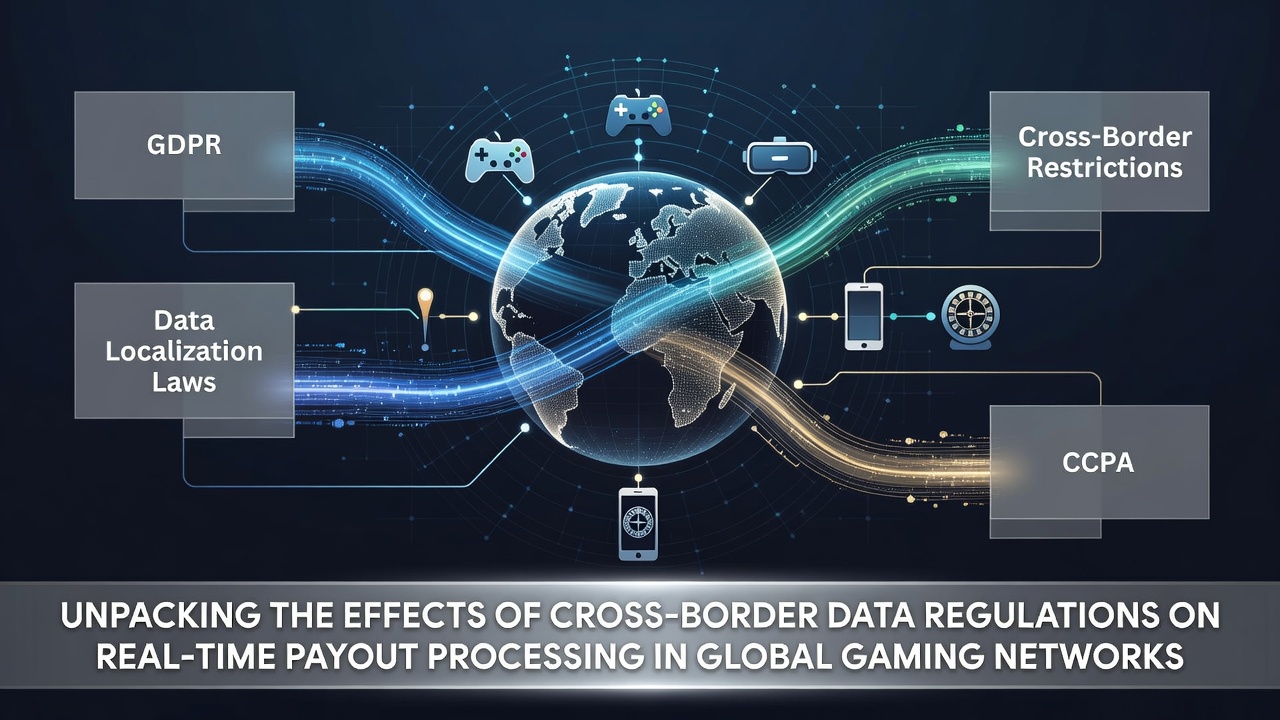
Cross-border data regulations have reshaped how global gaming networks manage real-time payout processing, and operators must navigate an expanding web of rules that dictate where player information can travel and how quickly transactions can clear. Data localization mandates in multiple jurisdictions require certain records to stay within national borders, while privacy frameworks impose consent checks and security protocols that add layers to every withdrawal request. In August 2026, several networks reported adjustments to their payout pipelines after new compliance guidelines took effect in key markets, illustrating how these rules continue to influence transaction speeds.
Regulatory Landscape Across Major Regions
Europe's General Data Protection Regulation continues to set benchmarks for data handling, requiring explicit player consent before any cross-border transfer of personal or financial details occurs during payout verification. Asian markets have introduced their own frameworks, such as China's Personal Information Protection Law and India's Digital Personal Data Protection Act, both of which impose strict conditions on exporting transaction data outside their territories. Observers note that these rules force gaming platforms to maintain regional data centers, which can extend the time needed to authenticate and release funds in real time.
North American approaches vary by jurisdiction, with Canada's Personal Information Protection and Electronic Documents Act and various U.S. state privacy statutes creating additional compliance checkpoints for international operators. Gaming networks that serve players across these borders often route payout requests through segmented systems to satisfy each region's data residency requirements, and this segmentation has measurable effects on processing velocity. Research from academic institutions shows that networks using unified global ledgers experience longer approval cycles when data must be copied or mirrored to comply with localization rules.
Impact on Transaction Velocity and Approval Times
Real-time payout processing relies on rapid data exchange between payment processors, gaming platforms, and financial institutions, yet cross-border regulations introduce mandatory pauses for data audits and transfer impact assessments. One study revealed that platforms operating under multiple data protection regimes recorded average delays of several seconds per transaction when additional verification steps were triggered, and those delays compound during peak activity periods. Networks that invested in localized servers reported smoother flows in some regions, whereas others faced bottlenecks when data had to hop between compliant zones.
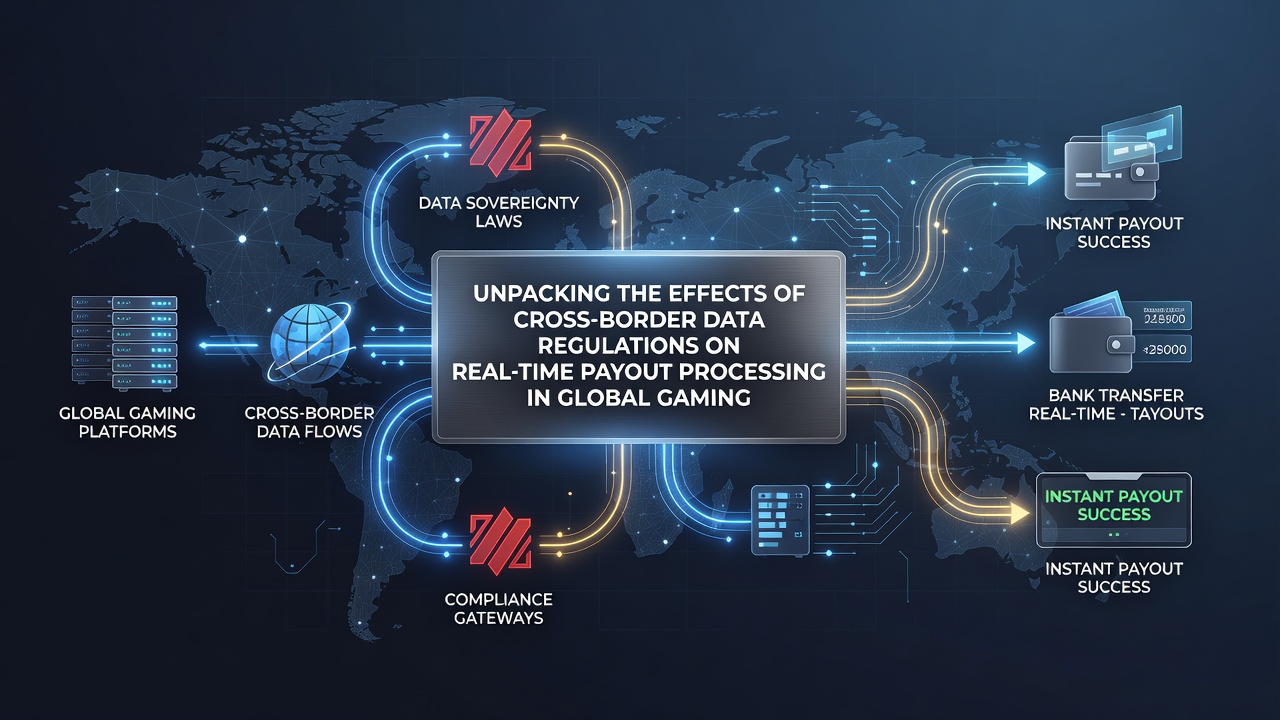
Payment service providers have adapted by embedding regulatory filters directly into their APIs, allowing gaming operators to flag and reroute transactions that require extra scrutiny before funds leave the platform. This integration reduces errors but also adds computational overhead, particularly when encryption standards differ across jurisdictions. Data indicates that networks processing withdrawals in markets with stringent data export rules often maintain separate queues for high-value payouts to accommodate manual compliance reviews, which further separates real-time claims from actual settlement.
Operational Adjustments by Gaming Networks
Operators have responded to these pressures by redesigning their infrastructure around regional data hubs, a strategy that keeps sensitive payout information within permitted borders while still enabling coordinated global play. Industry reports from the European Gaming and Betting Association highlight how some platforms now segment player accounts by jurisdiction, routing payout instructions through the nearest compliant node to minimize latency. This approach works well for volume-driven networks, yet it requires continuous updates whenever new regulations emerge in secondary markets.
Collaboration with payment gateways that already hold multi-jurisdictional licenses has become common, allowing gaming firms to outsource portions of the compliance burden. Those who've studied transaction logs across 2025 and 2026 observe that networks employing such partnerships reduced their average payout approval windows compared with peers maintaining fully in-house systems. Still, the underlying data transfer rules remain the limiting factor, and any mismatch between a player's location and the nearest approved server can stall processing until the required documentation clears.
Future Developments and Industry Responses
Emerging proposals in several regions aim to streamline cross-border data flows for financial transactions while preserving privacy safeguards, and gaming networks are monitoring these developments closely. A joint research paper from institutions in Canada and Australia examined how standardized transfer mechanisms might shorten approval times without compromising regulatory goals. If adopted, such frameworks could ease some of the current friction that forces platforms to maintain parallel processing paths.
Meanwhile, industry associations continue to publish guidance on best practices for aligning payout systems with evolving data rules, and operators who implement these recommendations early often gain measurable advantages in transaction reliability. The ball remains in the court of regulators and technology providers to develop solutions that keep pace with both player expectations and legal requirements.
Conclusion
Cross-border data regulations have become a permanent fixture in the architecture of global gaming networks, directly shaping the speed and reliability of real-time payout processing. Networks that align their systems with these rules through regional infrastructure and strategic partnerships maintain smoother operations, while those that lag encounter repeated delays. As new guidelines surface in 2026 and beyond, the ability to adapt data pathways will determine which platforms sustain competitive transaction performance across borders.